Our mission in action
Core Objectives in Detail
The JWSH mission is rooted in five overarching objectives that translate our purpose into both immediate action and long-term impact. Two objectives are designed as achievable short-term priorities, two reflect ambitious long-term goals, and one—raising awareness—is central to everything we do and will remain ongoing for the life of the Foundation.
Short-term objective
01 - Plant Hope
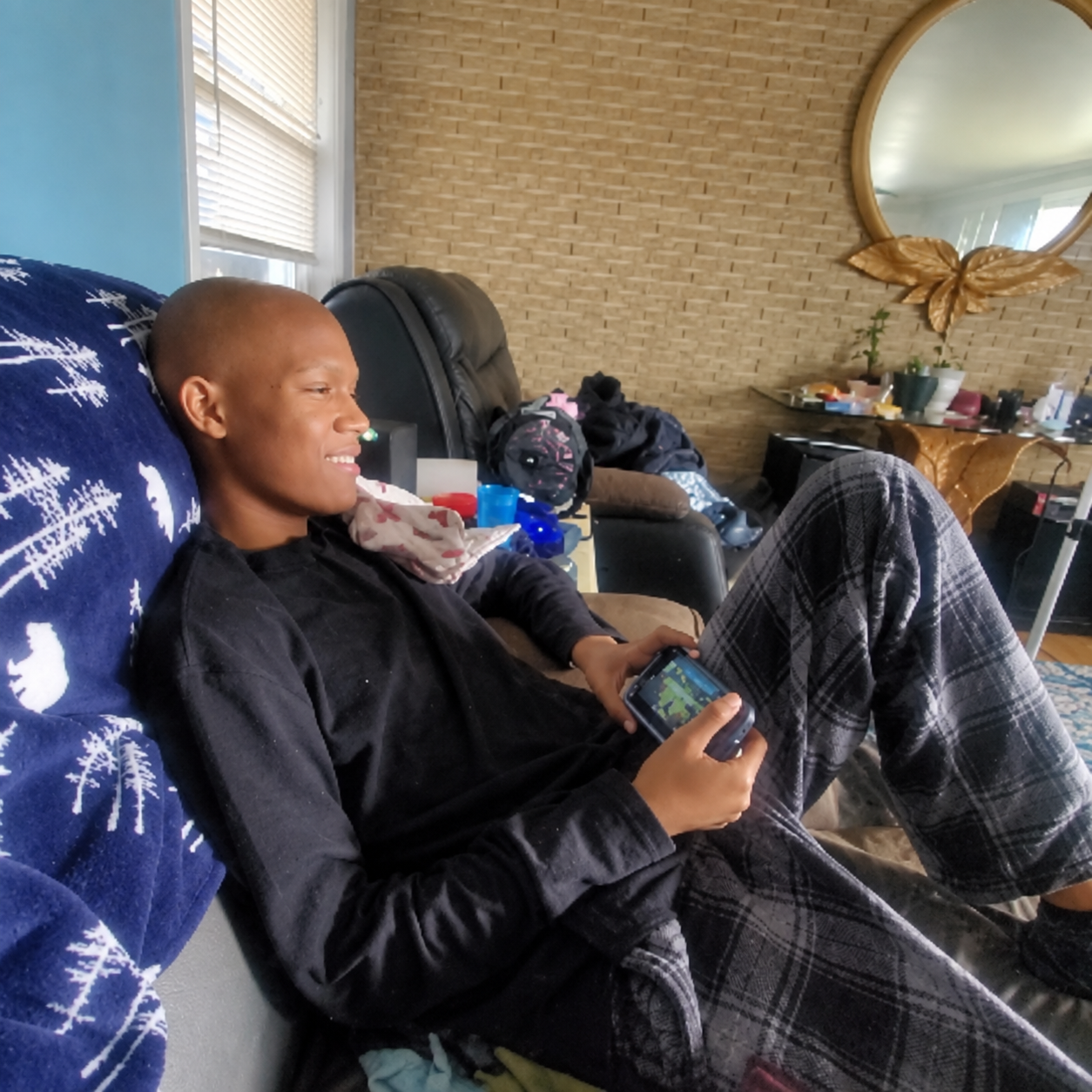
PLANT HOPE: This JWSH objective was born out of Jelani’s energy, deep love for family, and enduring commitment to nature, as well as our lived experience of just how hopeless battling pediatric cancer and other serious childhood diseases can feel. Our lives were shattered on the rocks from the very moment Jelani was diagnosed with cancer at age 14. We expected a trip to the emergency room on his first day of high school to end with some antibiotics for a kidney or bladder infection. Instead, after hours and hours of tests and uncertainty, we were told he had a large tumor that was more than likely cancer and his right kidney needed to be removed immediately. Jelani handled the diagnosis with a calm, brave approach beyond his years but typical of his manner. We agreed to the emergency surgery and hoped he would recover fully. A few weeks later, we were told the tumor was malignant and he had renal medullary carcinoma (RMC), one of the deadliest forms of kidney cancer, and only a 3%–10% chance of surviving. We prayed and fought with all our might and tons of love, prayers, and support from family, friends, church congregations, other religious organizations, and strangers all around the globe. Jelani endured surgeries, procedures, and some of the harshest forms of chemotherapy. In his own words, his life became “nothing but misery,” yet he battled valiantly to stay with us. Just days before his passing, he confided in his aunt and cousin that from the moment he received his diagnosis, he was pretty sure the cancer would take his life but he agreed to all the procedures and chemotherapy so his mom, sister, and the rest of his family would never have to think they did not do everything they could to save him. At a time when the average adult, let alone child, would feel the most hopeless, Jelani selflessly sought to bolster hope for those who loved him most. He was always unique and special in that way. As a toddler, Jelani idolized the fictional character Thomas the Train, and he modeled his own character after Thomas – constantly thinking about others.
While receiving chemotherapy, Jelani sometimes looked around at other children in treatment and spoke about how sorry he felt for them, especially babies and toddlers. He would say things like, “It’s terrible that baby has cancer and has to get chemo. I feel so sorry for her. At least I got to live 14 years before going through this.” Jelani’s biggest fear was that his twin baby sisters, Everlee and Eden, would forget him if he died. During the long days at the chemo clinic, he thought of them and often spoke of his concerns for them. Each week, an area nonprofit called Kate’s Kart came through the clinic to deliver books for children in treatment. Although Jelani was never a big fan of formal education and reading, he very happily picked out books and activities from the mobile carts to give to Everlee and Eden. Some weeks, the volunteers even let him have two if he struggled to choose which book the girls might like best. He built a small library for Everlee and Eden and occasionally read to them when he felt well enough.
Kate’s Kart was founded by Krista and Andy Layman in memory of their daughter, Katherine Ann “Kate” Layman. Kate was born with a serious congenital heart defect and died on January 15, 2008, at eighteen months old. Her parents treasured reading to her during her hospital stays. Through the books they give to hospitalized children, they continue honoring her life and bringing comfort to other families. Read Kate’s story.
We greatly admired the Layman family’s work and the kindness Kate’s Kart showed Jelani. Their example helped inspire our plan to offer plants, seeds, and gardening kits to children in treatment.
Short-term objective
02 - Empower Youth
EMPOWER YOUTH – Like his favorite childhood cartoon character, Thomas the Train, Jelani happily encouraged others to have similar values. He often spoke of his garden, the research he would do regarding nature, and the importance of humans taking better care of the world to ensure adequate food supplies in the future. Jelani cannot be here any longer to continue educating the world, but the JWSH Foundation can continue his efforts. We are partnering with Smiley’s Garden Angels (https://www.smileysgardenangels.com) to engage local youth in volunteerism and advocacy. The children who participate in Smiley’s Garden Angels program will help to grow flower and vegetable plants, harvest seeds, and package gardening kits for other children who are undergoing chemotherapy and receiving treatment for other serious illnesses at hospitals and clinics. JWSH will partner with Smiley’s Garden Angels and other nonprofits and educational organizations to educate young people on gardening/farming, environmental issues, homesteading and sustainability, and careers they might pursue related to these topics.
This work gives young people a chance to serve others while learning where food comes from, how living things grow, and how their choices affect the world around them. Growing and packaging plants for children in treatment connects education with an act of care.

Central and ongoing · Already underway
03 - Raise Awareness
Jelani’s family expected his emergency-room visit on his first day of high school to end with treatment for an infection. Instead, they learned that he had a kidney tumor. His eventual RMC diagnosis revealed how little they had known about this rare cancer, even though Jelani carried sickle cell trait. The foundation shares his story to help other families ask questions and find reliable information sooner.
RMC is a rare, aggressive kidney cancer closely associated with sickle cell trait. It can affect young people who appear healthy and athletic. The foundation’s awareness work connects patients, parents, educators, coaches, medical teams, researchers, and community organizations through education, outreach, advocacy, and partnership.
Research into high-intensity exercise and RMC is still developing. MD Anderson describes evidence from patient observations and animal studies; it does not establish why any individual developed cancer. Jelani’s experience motivates his family to share the research carefully and encourage informed conversations with clinicians.
Awareness is already underway and will remain central for as long as JWSH exists. Its purpose is to amplify patient and family experiences, improve understanding of RMC and other rare pediatric cancers, and support the research and advocacy needed for better outcomes.
MD Anderson’s RMC information · Research on sickle cell trait and exercise · JWSH RMC Awareness
Long-term objective
04 - Support Families
SUPPORT FAMILIES – Pediatric cancer doesn't just happen to a child — it happens to an entire family, and the impacts are almost always deep and long-lasting. In fact, many impacts are lifelong when a family loses a child like we have lost Jelani.
This is the reality no one warns you about: for every family that survives their child's cancer, another family has to learn how to survive their child's death — and almost nothing in our society is built to help them do it.
Bills Don't Pause for Grief – That devastation doesn't happen in a vacuum. While a family is trying to simply survive the unbearable, ordinary life keeps making demands: the financial toll pediatric cancer takes on a family, and the compounding losses that so often follow, are part of the same tragedy — not a separate one.
This should not need to be said, but it does: a family should never be fighting to save their home in the same season they are fighting to save their child — or grieving the loss of one. Housing instability and eviction are not a side effect of tragedy; they are a second tragedy, layered directly on top of the first, inflicted by a system that asks parents to choose between a paycheck and a bedside. And the toll doesn't end when a family loses the house — eviction and housing loss are linked to depression, anxiety, and long-term harm to the children left behind, the very children a grieving family is already trying to protect (PMC, Stress About Eviction/Loss of Housing and Child Mental Health). No parent should bury a child and lose their home in the same year. No family should have their grief compounded by a landlord's notice or a bank's foreclosure letter. This is not a rare or extreme outcome — it is a documented, common consequence of childhood cancer, and it is precisely the kind of preventable, secondary devastation that JWSH's family support pillar exists to stop.
Single Parents Carry an Even Heavier Load – For single parents, this crisis lands without a second income, a second set of hands, or a second person to share the exhaustion. Research comparing single parents to two-parent families confirms what many single mothers already know from experience: caregiving demand and its toll on health-related quality of life fall differently — and more heavily — on a parent who is the only one there (Pediatric Blood & Cancer, Klassen et al.). Studies of caregiver burden consistently find that single, divorced, or widowed mothers report significantly greater caregiver burden than married mothers navigating the same diagnosis (PubMed, Factors Associated with Caregiver Burden). There is no one to tag in during a 3 a.m. hospital transfer, no one else to keep the household's other children fed and steady, and no second paycheck to fall back on when one income has to shrink to make room for caregiving. Nearly all caregivers in this position report financial strain that reshapes every part of daily life (PMC, Care Burden and Associated Factors).
A Gap in Support No Family Should Fall Into – Many wonderful charitable organizations rally around families while a child is fighting cancer — meal trains, hospital comfort items, ride shares to appointments, even help covering treatment costs. That support matters enormously. But when a child dies, that support machinery overwhelmingly disappears. Almost no organizations are specifically dedicated to helping families in the aftermath of child death. The year after a child dies is when families are particularly vulnerable and most in need of support.
We know this because we have lived it. Parents in the rawest stage of grief are still expected to make the mortgage or rent payment. Keep the utilities connected. Keep food in the house. Manage a lawn or yard they no longer have the energy to touch. Find a way to access mental health support for themselves and for surviving siblings who are also trying to process a loss too enormous for a child's mind to hold — all while trying to simply function through daily life that does not pause, even though it feels like an atomic bomb has gone off inside your world. Comprehending the enormity of the loss, processing grief, and functioning enough to keep a household standing are not separate tasks that can wait their turn — they happen at the same time, in the same exhausted, shattered body, often with no one checking in anymore because the casseroles and the sympathy cards have stopped coming.
Like ours, many grieving families turn to GoFundMe and similar crowdfunding platforms out of desperation, but this path is often difficult and ineffective. Not every parent is social-media savvy or has a wide online network to amplify their story. And even for those who do, having to retell the most painful moment of your life over and over, publicly, to strangers, in the hope that someone will care enough to give — that is its own form of trauma, layered on top of a grief that is already unbearable and incomprehensible for those who have not experienced it.
JWSH seeks to join the frontline of support for families who have lost a child — not with a one-time gesture at the funeral, but with sustained, practical advocacy that connects grieving parents to the resources they need and, eventually, with one-time grants of $10,000 to help a family get through the brutal first year of loss. This is not abstract to us. We know exactly what it feels like to grieve a child while worrying whether the mortgage will be paid, whether the lights will stay on, and whether there will be food on the table — because we have lived every one of those fears ourselves. No parent should have to choose between grieving their child and keeping a roof over their surviving children's heads.
Jelani would be devastated to know his family faced these realities. He was a child who, even while sick, turned his own gifts into gifts for his little sisters. He would want other families spared what we went through. That is why we want to help others in ways we have needed help during the tragic, painful, confusing journey.
Long-term objective
05 - Build Legacy
For Jelani, legacy was never simply about being remembered. It was about family, love, and what he could leave growing in someone else’s hands.
When Everlee and Eden were born on January 15, 2022, Jelani was 12 years old, and he loved being their big brother. He had not yet received his own diagnosis and had no idea what was coming — but he grew up watching his mother’s fertility struggle, and he understood, in a way most kids never have reason to, what it took to bring a child into this family.
Jelani was not a big fan of formal education, but he was a voracious learner with an insatiable curiosity about the natural world. So rather than simply take a book for himself and set it aside, Jelani, in typical loving fashion, thought of his baby sisters. He thought back to how he and Azaria had loved having their mom read to them when they were toddlers. And he resolved to gather a collection of books from Kate’s Kart — one visit at a time — to build his sisters a library of their own. Even while receiving care, Jelani was thinking about what he could give.
In fall 2024, before Jelani began chemotherapy, his oncologist, Dr. Dennis O’Brien, told him and his family that the treatment ahead would leave him sterile. He offered Jelani the option to preserve his fertility first.
Jelani understood exactly what that meant. He had watched his mother’s infertility journey his whole life — he knew how hard it could be to have a child, and he knew that saving his sperm now could mean a child of his own someday, whether he beat the cancer or not.
His choice was remarkably mature. Jelani loved babies and would have made a great dad. He passed away on May 20, 2025.
Jelani’s preserved fertility remains, today, a possibility his mother thinks about constantly — the chance, however distant, of one day meeting a grandchild born from the choice her son made, fully understanding what it might someday mean, in the middle of his own fight to survive.
This is a gap that, as far as we have been able to find, no existing organization addresses: support specifically for bereaved parents holding onto a deceased child’s preserved genetic material and hoping one day for a grandchild that child made a deliberate choice to make possible. JWSH intends to help change that by raising awareness of this deeply personal and largely overlooked need, connecting families with informed guidance, and exploring what meaningful support might one day be possible.
The foundation’s long-term aim is to connect families with informed medical, legal, and emotional guidance and explore support for the costs and decisions surrounding preserved fertility after a child’s death. Alongside that work, Build Legacy protects memories, family bonds, and the possibilities a child hoped to leave behind.

Together, these five objectives provide a roadmap for JWSH—beginning with the work we can do now, building toward the work we hope to accomplish in the future, and keeping awareness and advocacy at the heart of our mission every step of the way.
Return to the Foundation Overview